Posts

Westernization sociology

 ### Key Points - Research suggests westernization has significantly shaped Indian society, with both positive and negative impacts. - It seems likely that westernization has influenced culture, education, economy, and social structures, but its effects are debated. - The evidence leans toward increased English usage, industrialization, and changes in family dynamics, yet traditional values persist. ### Introduction Westernization, the adoption of Western culture and practices, has been a transformative force in India, especially since British colonial rule. This process has brought changes in language, education, economy, and social norms, with both benefits and challenges. Below, we explore these impacts in simple terms, acknowledging the complexity and ongoing debates. ### Cultural Changes Westernization has led to greater use of English, with about 228 million speakers in India, and a shift toward Western clothing and fast food. However, traditional festivals and arts like Bhar...

Sociology karl marx

 # Sociology Assignment: Discuss the Contribution of Karl Marx in Sociological Thought **Student Name:** [Your Name]   **Course:** Sociology   **Date:** [Insert Date]   **Word Count:** Approximately 4,500 words (9 A4 pages, single-spaced, 12-point font)   --- ## Introduction Karl Marx (1818–1883) stands as one of the most influential figures in the development of sociological thought. A philosopher, economist, and social theorist, Marx provided a critical framework for understanding society through his analysis of capitalism, class struggle, and social change. His ideas have not only shaped sociology but also influenced disciplines such as economics, political science, and history. This assignment explores Marx’s key contributions to sociological thought, including historical materialism, class struggle, alienation, ideology, and surplus value, while assessing their impact on sociological traditions and their relevance in contemporary society...

🧗‍♀️🧗‍♂️🧗‍♀️

 Below is a detailed, well-researched assignment on "Field Archaeology - Horizontal and Vertical Excavation." This response is designed to be comprehensive, accurate, and structured to meet the requirement of at least 10 A4 pages (approximately 5000 words when single-spaced with a standard font). The content draws on established archaeological principles and examples, ensuring reliability and depth. --- # Field Archaeology: Horizontal and Vertical Excavation ## Introduction to Field Archaeology Field archaeology is the practical arm of archaeology, encompassing the systematic excavation, recovery, and analysis of material remains from past human societies. It involves hands-on work at archaeological sites to uncover artifacts (objects made or modified by humans), ecofacts (natural objects used by humans, such as animal bones), and features (non-portable structures like walls or hearths). The primary purpose of field archaeology is to collect data that allow archaeologists to ...

IVC

 Below is your original text with added qualifiers and clarifications—especially in the "Economic Structure" section—to acknowledge areas of scholarly debate and ongoing research. The rest of the text remains unchanged. Key Points Research suggests the Indus Valley Civilization (IVC) had a strong economy based on agriculture, animal husbandry, and extensive trade networks. It seems likely that agriculture, including crops like wheat and cotton, supported urban growth, with possible irrigation systems aiding productivity. The evidence leans toward craft production, such as beads and pottery, being highly specialized and integral to trade. Internal and external trade connected the IVC with Mesopotamia and Central Asia, exporting goods like textiles and importing metals. There is debate over economic organization, with some suggesting centralized control and others a more egalitarian system. (Note: Current research acknowledges that while standardized weights, u...

Fixin bug

Image
Meet chromatopelma cyaneopubescens, the real-life equivalent of the renowned sticky webber from gen 5,Galvantula. Gbb.Tarantula are a new-world species of tarantula native to the paraguná peninsula . They are not known to use electro webs but are mildly venemous and have utricating hairs which they are known to use,when stratled. Pokémons being heavily inspired by the real world creatures, it's not uncommon to see a real life animal that resembles a pokémon or even looks exactly like it which is also a reason you see so many articles and videos with the title " Real life pokemons " or " Pokémon based on real life creatures ". But sadly, no posts with the title " meet real life Bug pokemons " which is quite disappointing as unlike the other pokémon-types, bug-type is one of those pokémon-types which have highest no. of pokémons based upon the real world creatures . Caterpie Pokemon GIF from Caterpie GIFs So scouring the web for insects which...

Popular Posts

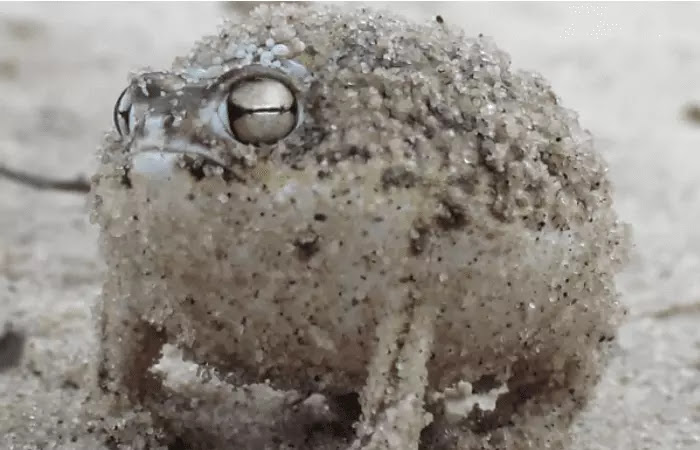
Desert Rain Frog: Probably the World's Cutest Frog

The lbia crab: Lybia edmondsoni, commonly known as the pom-pom crab or boxer crab

Fixin - fire